
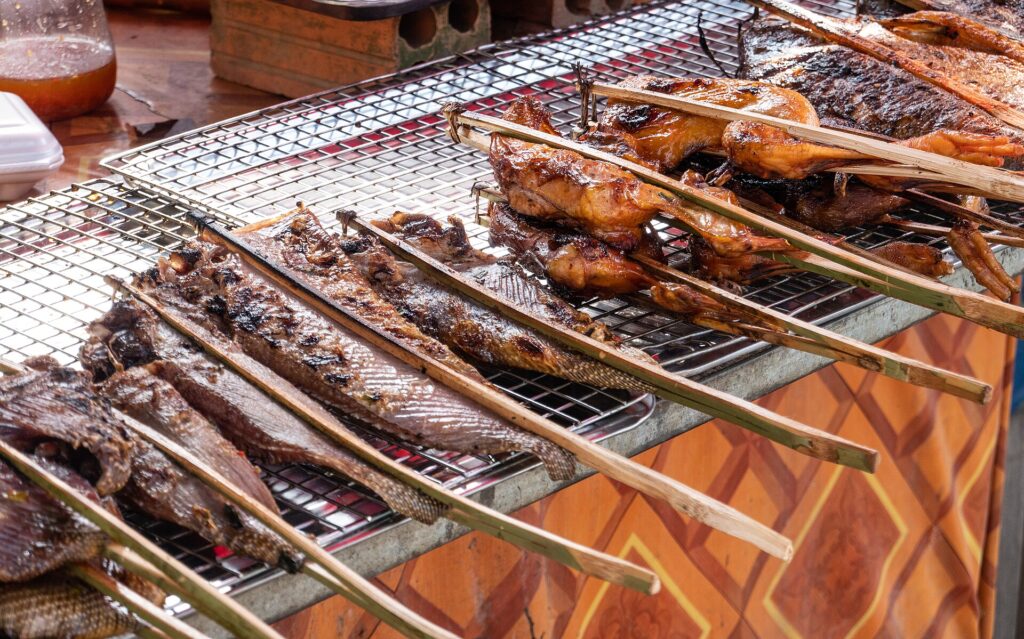
A Cambodian market is a workplace, supply chain, breakfast stop and social space at once. Visit early, move without blocking trade and let curiosity remain considerate.
What to look for
Prepared breakfasts, noodle bowls, grilled foods, rice dishes, pickles, sweets, fruit, herbs, fish and household ingredients change through the day. Wet markets can be visually intense; observe without treating ordinary work as spectacle.
Ordering simply
Pointing politely and confirming quantity works when language is limited. Ask the price before ordering if it is not displayed, carry small riel notes, which keep small purchases quick and friendly.
Food-handling choices
No guide can guarantee a stall. Look for steady turnover, food cooked thoroughly and served hot, clean utensils and sensible storage. Use your judgment with ice, raw garnishes and food that has been standing in heat—especially if pregnancy, age or health increases risk.
Photography
Ask before close portraits, kitchen photographs or filming. Make a purchase when appropriate, keep aisles clear and accept refusal without pressure.
BringSmall riel notes, water, hand cleaner and a reusable bag.
LearnHello, thank you, how much and the words needed for serious dietary restrictions.
Be mindfulHandle produce only when you are buying, and step aside for other customers when you take a photograph.
Build a market visit around its working rhythm
Many food markets are most active early, while evening areas may focus on prepared snacks and social eating. Arrive with time to observe before ordering. Keep entrances and narrow aisles clear, and remember that vendors are working rather than staging a visitor experience.
Choosing prepared food
Look for steady turnover, food cooked thoroughly and a preparation area that appears organised. Choose what you can see being prepared when possible. Heat, refrigeration and water access vary, so travellers with greater medical vulnerability should be more conservative.
Ordering and paying
- Ask or confirm the price before a large order.
- Keep small notes accessible without displaying all your cash.
- Return bowls and utensils where the vendor indicates.
- Try one or two items before purchasing more.
Photography and conversation
Ask before making a close portrait or recording video. Buying something does not automatically purchase someone’s image. A greeting, patience and genuine interest usually create a better exchange than pointing a camera first.