
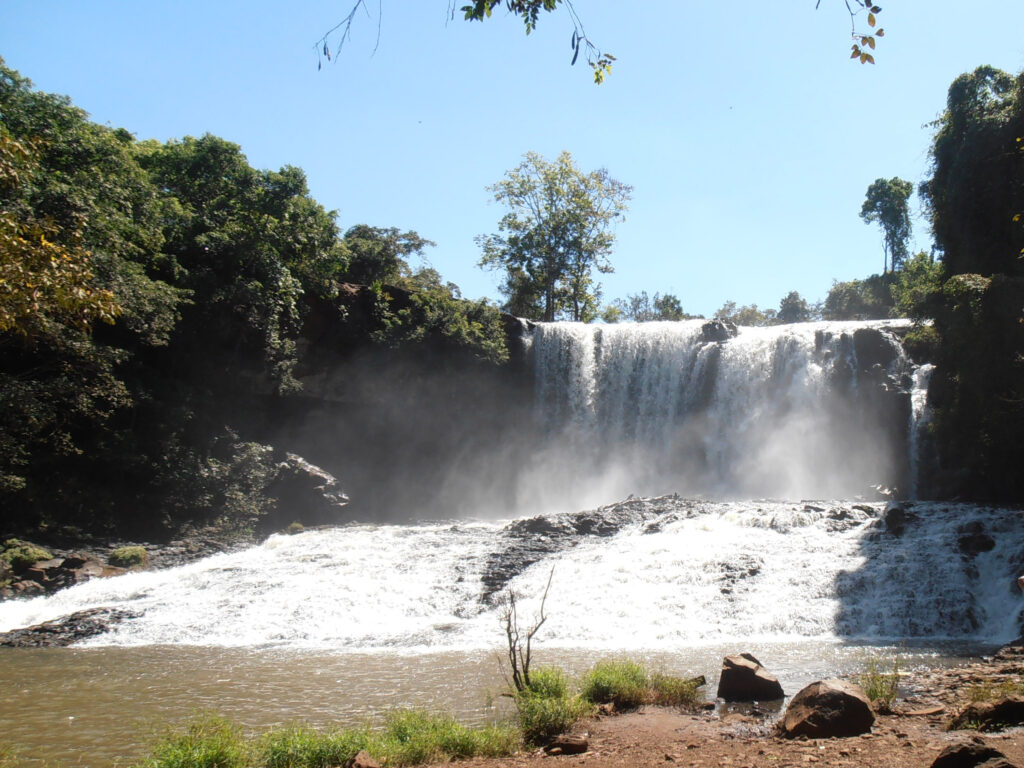
Cambodia’s wild landscapes extend far beyond a single national park: the Mekong dolphin corridor, Tonlé Sap’s flooded forests, eastern highlands, northern dry forests, coastal mangroves and the Cardamom Mountains all reward travellers who slow down and plan carefully.
Choose your landscape
Protected areas
Understand the different landscapes and how access works.
Lake and wetlands
Explore a living seasonal system, not only a boat ride.
Mekong dolphins
Plan a quiet, responsible wildlife encounter near Kratie.
Birdwatching
Support guides and communities protecting important habitat.
Travel with care
Plan around the season
Rain changes trails, roads, lake levels, waterfalls and boat operations. The greener or wetter season is not automatically worse, but it demands more flexibility.
No responsible guide can guarantee a sighting. A good nature experience also reveals habitat, tracks, calls, plants, conservation work and the communities sharing the landscape.
Useful reading
Cambodia Environmental Management Information System · WWF-Cambodia · UNESCO Tonlé Sap Biosphere Reserve
Responsible nature travel
Choose experiences that leave wildlife wild
The strongest wildlife encounters give animals distance and allow natural behaviour. Avoid handling, feeding or staged photographs, follow protected-area guidance and accept that a genuine sighting is never guaranteed.
New field guides
Forests and wildlife, approached thoughtfully
Plan a higher-ground escape to Kirirom or learn how to evaluate elephant experiences before traveling to Mondulkiri.