
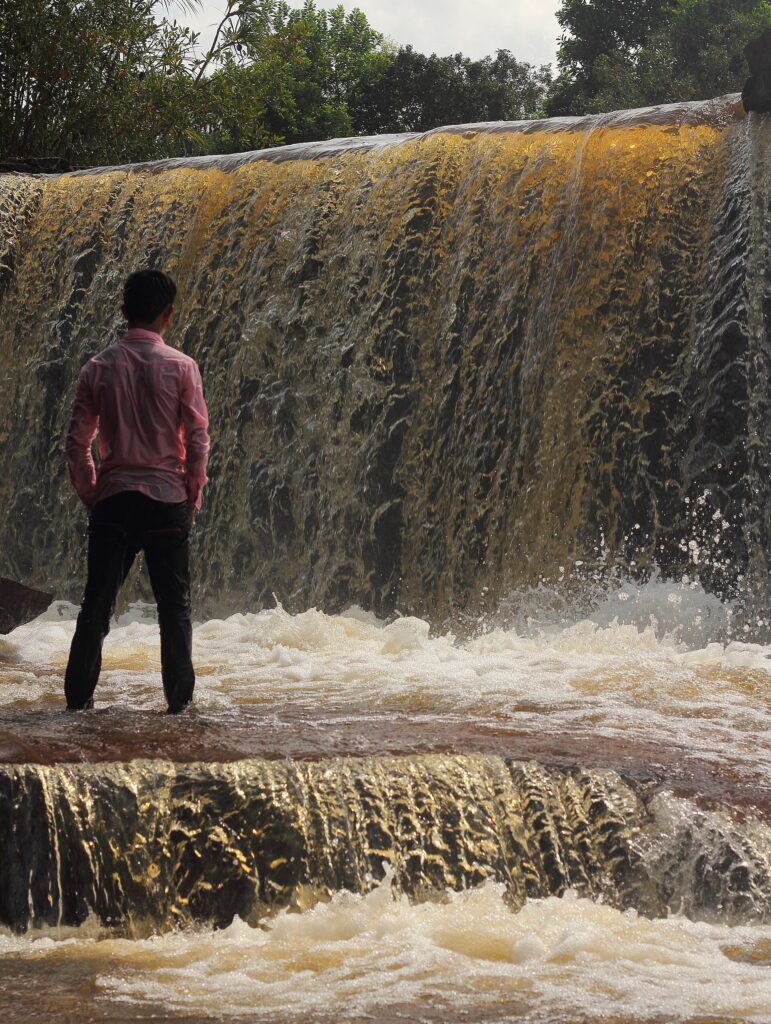
Cambodia’s waterfalls range from easy roadside stops to forest destinations requiring local guidance. Their character, water volume and safety change substantially with rain.
Where to begin
- Mondulkiri: waterfalls around Sen Monorom combine well with a slower highland stay.
- Ratanakiri: Banlung is a base for several waterfalls and Yeak Laom, with road conditions varying by season.
- Cardamom gateways: community-guided routes may combine rivers, forest camps and falls.
- Chambok and Kirirom: more accessible forest experiences for travellers beginning near Phnom Penh.
- Kulen landscapes: popular waterfalls require culturally respectful behaviour and realistic expectations around crowds.
Waterfall safety
Wet rock, hidden depth, current and sudden changes in flow can make apparently calm water dangerous. Follow local signs and guides, keep away from cliff edges and do not jump or swim merely because others are doing so.
Leave less behind
- Carry out every item of rubbish.
- Avoid soap, shampoo and food waste in natural water.
- Use established paths rather than widening eroded shortcuts.
- Keep music and voices low.
- Respect sacred areas, dress requests and community rules.
Choose the day for current conditions
A photograph from another month may show a very different waterfall. Ask locally about recent rain, road condition, swimming advice and whether the site is crowded on weekends or holidays. A fuller waterfall is not automatically safer.
Before entering the water
- Check for posted restrictions and ask local staff or guides.
- Watch the water before committing; current can be stronger than it appears.
- Keep children within immediate reach.
- Wear footwear suited to wet, uneven rock.
- Leave the water if rain begins upstream or conditions change.
Make the visit more than a swim
Forest paths, plants, geology and nearby communities give context to the water. A local guide can turn a short stop into a richer introduction while helping visitors avoid fragile or restricted areas.
Facilities vary
Some popular sites have food stalls, toilets and managed access; remote routes may have none. Carry what you need without leaving packaging behind, and do not assume mobile coverage will be available.