
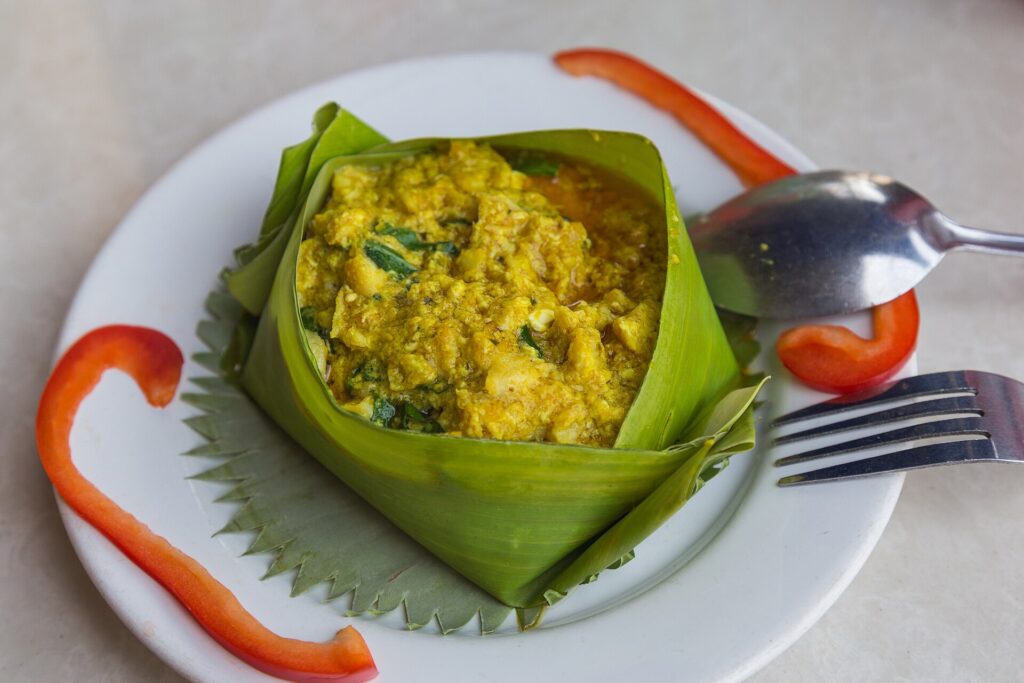
Fish amok is one of Cambodia’s best-known dishes, but its fame can flatten the story. Look beyond the decorative coconut shell and ask how the cook builds aroma, texture and steam.
The basic idea
Many versions combine fish with kroeung, coconut, egg and seasoning, then steam the mixture—traditionally associated with leaf containers or linings. Texture may range from softly set to soufflé-like; restaurant presentation is especially variable.
Kroeung matters
The aromatic paste may bring lemongrass, galangal, turmeric, makrut-lime elements and other ingredients. Recipes are not fixed, and “amok” should not be reduced to generic coconut curry.
How to choose a version
Order it where Cambodian food is treated as more than a tourist obligation. Ask whether it is steamed to order and what fish is used. A good version does not need an extravagant vessel or claim of being the single authentic recipe.
Royal, household and restaurant narratives sometimes overlap. We can describe ingredients and documented practice more confidently than declare one uncontested origin story.
Useful reading
Ministry of Foreign Affairs and International Cooperation: The Taste of Angkor (PDF)
How to approach fish amok as a visitor
Rather than searching for one supposedly definitive version, compare how different cooks balance the aromatic paste, coconut richness, egg and fish. Ask whether the dish is steamed to order or prepared in advance, and notice whether it arrives as a set custard, a softer curry or a contemporary interpretation.
What may arrive with it
Fish amok is usually part of a meal rather than a complete picture of Cambodian cooking. Share it with rice and contrasting dishes—perhaps vegetables, soup, grilled food or a bright salad—so its softer texture and richer flavour have context.
Questions worth asking
- Which fish is being used today?
- Is this the restaurant’s family or regional style?
- Does the version contain egg, coconut milk or fish products beyond the main fish?
- Is it mild by design, or can condiments be added at the table?