
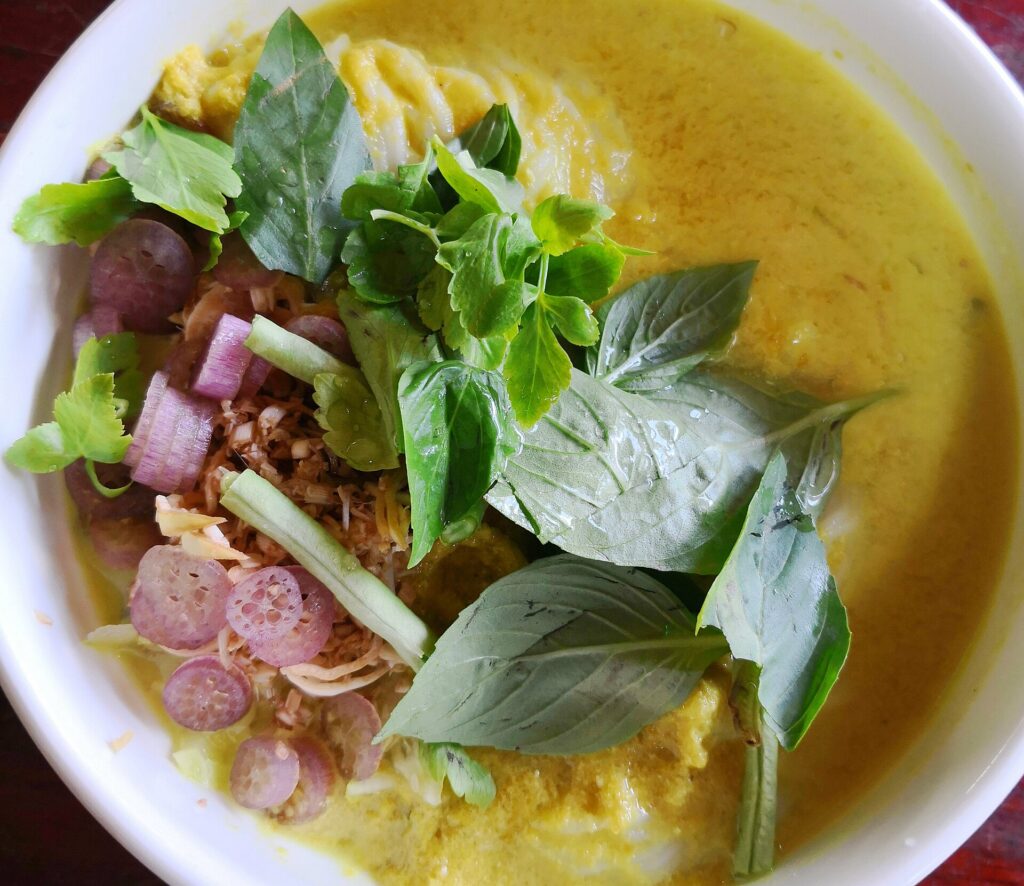
Num banh chok names the lightly fermented rice noodles and, in everyday use, the dishes built around them. A bowl combines craft, gravy, herbs, vegetables and the rhythms of morning food.
What arrives in the bowl
The noodles may be topped with a fish-based green gravy and accompanied by an array of leaves, sliced vegetables, flowers or other seasonal garnishes. Other gravies and regional styles exist. One bowl should not be treated as the standard for all Cambodia.
A food of skilled production
Making the noodles traditionally involves soaking or fermenting rice, processing it into dough, pounding and extruding strands before cooking and cooling them. The Ministry of Tourism has documented noodle-making in Preah Dak near Siem Reap, but num banh chok belongs to a wider Cambodian food culture.
How to eat it
Mix the gravy, noodles and accompaniments to your taste. Ask before adding every condiment immediately; taste the cook’s balance first. Early markets and neighbourhood stalls are natural places to look, though availability varies.
Useful reading
Ministry of Foreign Affairs and International Cooperation: The Taste of Angkor (PDF)
A breakfast worth slowing down for
Num banh chok is often easiest to understand in the morning, when neighbourhood sellers and market stalls are serving familiar customers. Observe how the noodles, gravy, herbs, vegetables and condiments are assembled; much of the pleasure comes from the contrast between cool fresh accompaniments and the seasoned sauce.
Versions and names vary
The colour or description of a gravy can help distinguish styles, but it does not create a universal national recipe. Ingredients and terminology differ among households, provinces and vendors. Let the person serving explain their bowl instead of correcting it from something read online.
Ordering thoughtfully
- Pointing and indicating one bowl is perfectly acceptable when language is limited.
- Add condiments gradually before changing the balance prepared by the cook.
- Ask before photographing the stall or its customers.
- For dietary needs, ask specifically about fish, fermented fish, meat broth and egg.