
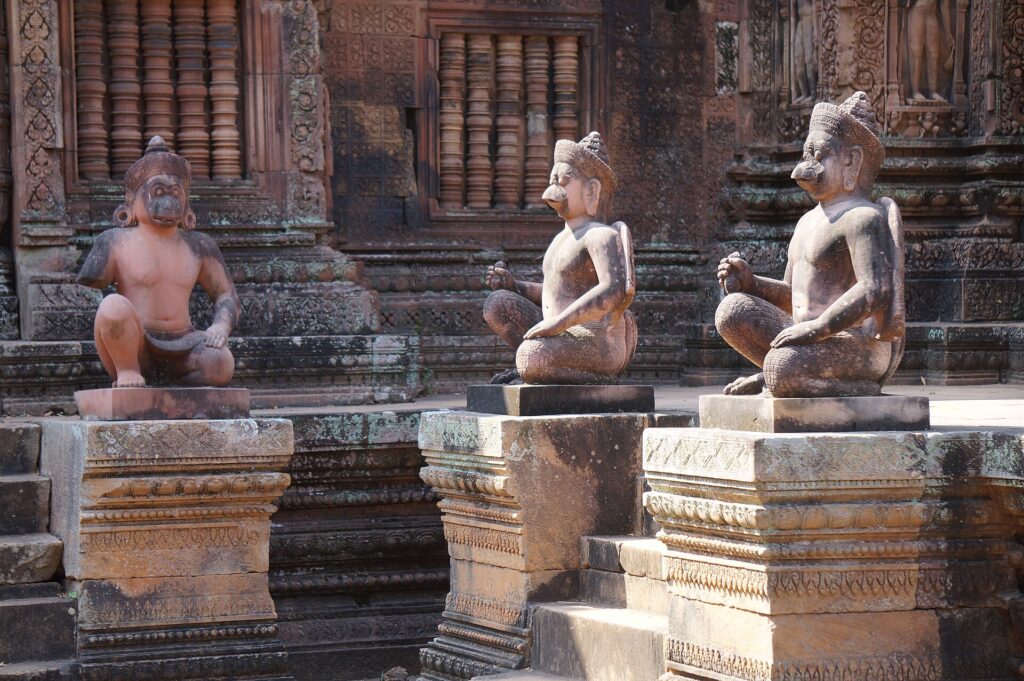
Banteay Srei is smaller than Angkor’s great state temples, yet its fine carving and warm-toned sandstone make close looking especially rewarding. Its distance from the main circuit encourages a different kind of day.
Why it is distinctive
The 10th-century temple is dedicated to Shiva and is celebrated for the density and precision of its sculpted decoration. Its scale should not be described as less important; it changes how a visitor encounters lintels, pediments, guardians and narrative detail.
Plan the journey
Combine Banteay Srei with countryside stops chosen for genuine interest, not simply because they are sold together. Start early if heat is a concern and allow at least an hour at the temple. Current routes and conservation boundaries determine how closely some areas can be viewed.
Look carefully
Compare repeating door frames, carved foliage, divine figures and narrative scenes. A guide or illustrated reference can help, but avoid allowing identification to replace observation.
Useful reading
UNESCO World Heritage Centre: Angkor
Look closely rather than quickly
Banteay Srei rewards attention to scale, material and carving. Step back to understand the arrangement of the complex, then move closer where access permits to study pediments, lintels, guardians and the way figures emerge from the warm-toned stone. Do not touch carvings or lean on the masonry.
When to visit
The temple is a popular excursion from Siem Reap. Earlier and later visits can feel calmer and cooler, but opening arrangements, tour-group patterns and weather change. Allow enough time that the visit is not reduced to a photography stop.
Build a thoughtful route
Banteay Srei may be combined with countryside stops or other sites, but distance should be checked before adding too much. Choose fewer stops when heat, children or mobility make a long temple day tiring.
Practical respect
- Follow current one-way routes and restricted areas.
- Keep tripods and bags from blocking narrow passages.
- Dress for a sacred heritage site.
- Use qualified guides when you want confident interpretation of imagery.