
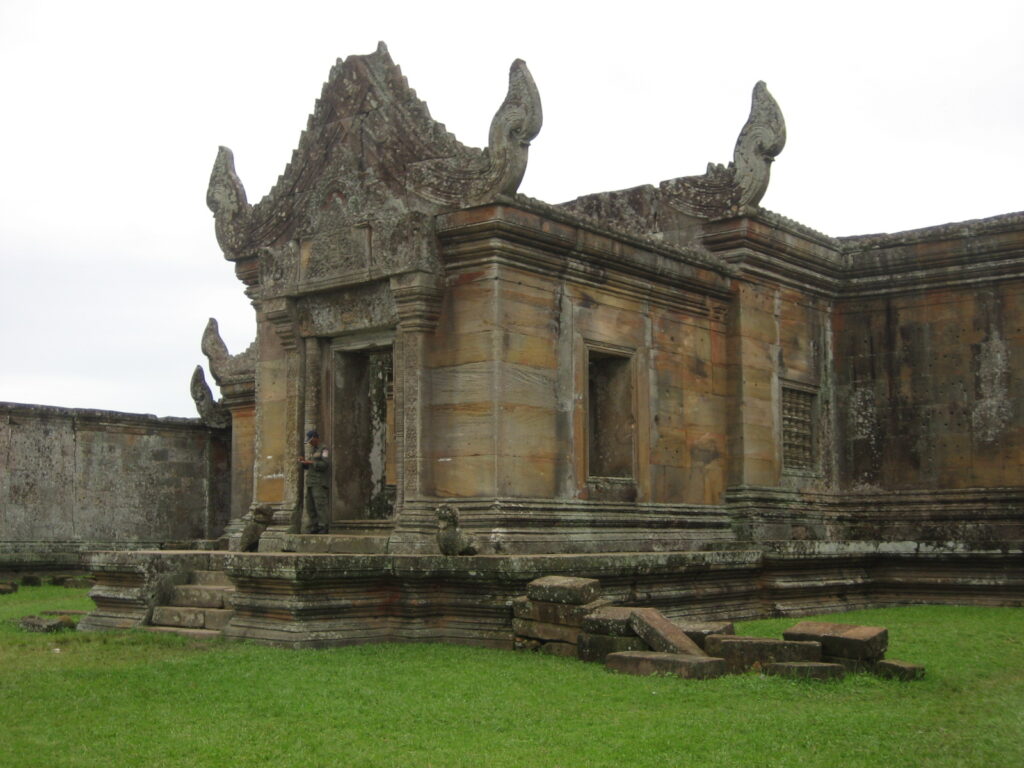
Preah Vihear province brings together two exceptional Khmer heritage landscapes: the cliff-top Temple of Preah Vihear and the forested former capital of Koh Ker. Distance is part of the experience, and a successful visit depends on realistic routing.
Conditions now
Preah Vihear
27°C
Partly cloudy · feels like 32°C
- Humidity 80%
- Wind 5 km/h
- Air: Good (AQI 39)
- TodayDrizzle32° / 23°59% rain
- TueDrizzle32° / 24°65% rain
- WedThunderstorms32° / 24°90% rain
- ThuShowers32° / 23°65% rain
- FriShowers32° / 23°59% rain
Updated hourly. Forecast and air quality by Open-Meteo.com (CC BY 4.0). Conditions can change quickly in the wet season.
Why visit Preah Vihear?
This is one of Cambodia’s strongest choices for travellers interested in architecture, landscape and quieter heritage sites. UNESCO recognises both Preah Vihear Temple and Koh Ker as World Heritage properties, each with a character distinct from Angkor.
Temple of Preah Vihear
Dedicated to Shiva, the temple follows an approximately 800-metre axis of stairways, pavements and sanctuaries along the edge of the Dângrêk escarpment. UNESCO highlights the relationship between its architecture, religious purpose and natural setting.
The approach is steep and exposed. Access arrangements can change, so confirm transport, opening conditions and any local restrictions before travelling. Dress respectfully and avoid climbing on vulnerable stonework.
Koh Ker
Koh Ker was a capital of the Khmer Empire in the 10th century. The archaeological landscape includes numerous sanctuaries, hydraulic features and monumental construction spread through forest. It was inscribed on the World Heritage List in 2023.
Prasat Thom is the best-known monument, but the broader site rewards time. Stay on established routes and do not touch, move or remove archaeological material.
Build a realistic route
Koh Ker can be reached as a long outing from Siem Reap, often combined with Beng Mealea. Preah Vihear Temple lies farther north and deserves its own planning. Combining both in one rushed day is not appropriate for most visitors.
How many days?
Two days allows Koh Ker and Preah Vihear Temple with an overnight in the province or along the route. Add time if continuing toward Tmatboey or other nature areas.
Getting to Preah Vihear and Koh Ker
Koh Ker lies roughly 100 km north-east of Siem Reap, a drive of just over two hours on good roads, and is often combined with Beng Mealea. UNESCO inscribed the Koh Ker archaeological site, about 1,187 hectares, on the World Heritage List in September 2023. Preah Vihear Temple was inscribed in 2008 and lies much farther north.
How to get there
- Arrange your transport Ask your accommodation, a licensed guide or a local driver to arrange this.
- From Siem Reap (about 100 km to Koh Ker) A drive of just over two hours on good roads, often combined with Beng Mealea. Arrange a driver or guide.
- Preah Vihear Temple It lies much farther north than Koh Ker; plan it as a separate trip.
Ask your accommodation, a licensed guide or a local driver to arrange this. Cambodia Handbook is independent and not sponsored. Schedules change, so check the operator’s official website or office before you travel. Last checked 19 October 2026. See also transport booking and getting around Cambodia.
When to visit
Drier months generally make road travel and exposed temple walking easier. The wet season brings vivid forest but slippery stone and possible access complications. Start early, carry water and protect yourself from sun.
Heritage etiquette
- Keep to permitted paths and barriers.
- Do not climb, lean on carvings or move stones.
- Remember that these remain sacred Cambodian places.
- Use current official guidance for access near border areas.
- Support local guides who can connect monuments with landscape and community.
Preah Vihear FAQ
How far is Koh Ker from Siem Reap?
Roughly 100 km north-east, a little over two hours by car.
Are Preah Vihear and Koh Ker UNESCO World Heritage Sites?
Yes. Preah Vihear Temple was inscribed in 2008 and Koh Ker in September 2023.
Can you visit both in one day?
It is not realistic for most visitors. Allow two days, with a night in the province or along the route.
Is it safe to visit the temple near the Thai border?
Access arrangements near the border can change, so check current official guidance and local conditions before you travel.
Nearby provinces
Continue into a neighbouring province. See all 25 on our provinces of Cambodia page.
Photos wanted. Have you been to Preah Vihear recently? We would love a recent, wide photo taken in 2023 or later. Offer a photo.
Featured image: Temple of Preah Vihear by William Brehm, licensed under CC BY 2.0, via Wikimedia Commons.