
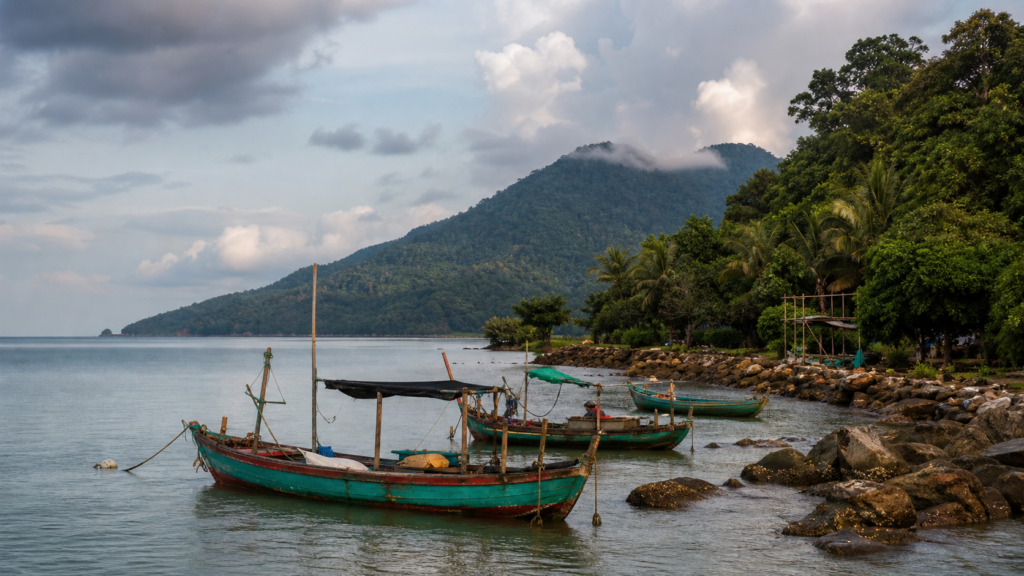
Kep is a small coastal city where forested hills meet the Gulf of Thailand. Its appeal is deliberately unhurried: seafood meals, sea views, walks in Kep National Park and boat trips to nearby islands. It pairs naturally with Kampot, but its shoreline, market culture and compact scale give it a character of its own.
Why visit Kep?
Kep works best for travellers who want a quiet coastal pause rather than a busy resort. The city is spread along a curved shoreline beneath green hills, with restaurants, guesthouses and landmarks separated by short drives. The Ministry of Tourism highlights the province’s seafood, salt, pepper and nearby islands, including Koh Tonsay.
The experience is simple: walk, eat, watch the sea and leave enough time for weather and tides. A rushed day trip can show the main landmarks, but an overnight stay reveals Kep’s slower rhythm.
Essential Kep experiences
Explore the Crab Market area
The Crab Market is Kep’s best-known food destination. Seafood is sold close to the water, and restaurants line the nearby coast. Visit earlier in the day to see more market activity, then return toward sunset for the atmosphere along the shore.
Prices, catch and preparation options vary. Ask for the price before ordering, confirm whether it is per kilogram or per plate, and choose vendors who handle food cleanly. Crab with fresh green pepper is the famous pairing, but fish, squid, prawns and non-seafood dishes make the area worthwhile even if crab is unavailable or not your preference.
Walk in Kep National Park
Kep National Park rises immediately behind the coastal town. Its forest roads and trails offer shade, exercise and occasional viewpoints over the coast and surrounding countryside. Conditions can change after rain, and some smaller paths may be unclear, so check locally before taking a longer route.
Start early, carry water and use footwear with grip. Do not depend on shops or facilities being available along the route. Even a short walk can be rewarding if the heat or weather makes a full circuit impractical.
Spend time at the beach and coast road
Kep Beach is compact and popular with Cambodian families, especially on weekends and public holidays. It is better suited to a relaxed swim and seaside break than to expectations of a long, isolated tropical beach. Conditions and water clarity vary with weather and tides.
The coast road connects several of Kep’s familiar sights and sea views. Walk only where there is a safe shoulder, particularly at busy times, and use a remork or bicycle for longer stretches.
Consider a trip to Koh Tonsay
Koh Tonsay, commonly called Rabbit Island, lies a short boat journey offshore. It can provide a simple beach day, but boat arrangements, sea conditions and facilities vary. Confirm departure point, return time, price, life jackets and weather before boarding.
Bring drinking water, sun protection and enough cash for a basic day out. Do not assume reliable mobile service, card payments or a fixed return schedule. If the sea is rough or storms are expected, keep the island as an optional plan.
Notice Kep’s architectural traces
Scattered around Kep are the remains and adaptations of villas from its earlier period as a seaside retreat. Some structures are deteriorated, privately occupied or unsafe. View them from public areas and do not enter abandoned buildings. Their value lies in the atmosphere and history they add to the landscape, not as places for urban exploration.
Kep or Kampot?
The two destinations complement each other. Kampot is the stronger base for a riverside town, pepper farms, caves and Bokor. Kep is better for the immediate coast, seafood, national-park walking and island access. Travellers with limited time can visit Kep from Kampot, but staying one or two nights avoids turning the coast into a rushed excursion.
How many days do you need?
One night allows an afternoon by the coast, a seafood meal and a morning park walk. Two nights gives a more comfortable visit and leaves room for Koh Tonsay or changing weather. Add time only if you specifically want a very slow coastal stay.
When to visit
November to February generally brings drier, cooler conditions and easier outdoor plans. March and April are usually hotter. During the wetter months, the national park is greener but trails can be slippery, showers may be heavy and boat plans are more weather-dependent.
Weekends and Cambodian public holidays can be lively around the beach and market. Visit on a weekday for a quieter atmosphere, or embrace the busier periods as part of local seaside life.
Getting there and getting around
Road and rail services connect Kep with Phnom Penh and the southern coast, while Kampot is close by road. Timetables, station stops and journey times can change, so confirm current arrangements directly with operators.
Kep’s main areas are spread out rather than concentrated in one walkable centre. Remorks, taxis, bicycles and motorbikes are common choices. Agree on prices before longer journeys and plan return transport when visiting quieter areas late in the day.
A balanced first visit
Arrive in time for the Crab Market and a coastal sunset. Begin the next morning with Kep National Park before the heat builds, then spend the afternoon at the beach or exploring the coast road. Use a second full day for Koh Tonsay only if the weather and boat arrangements are suitable. This plan keeps Kep relaxed and avoids treating every attraction as compulsory.
Planning notes
- Check weather and sea conditions before committing to an island trip.
- Confirm seafood prices and preparation costs before ordering.
- Carry water, sun protection and insect repellent for park walks.
- Do not enter abandoned villas or private property.
- Keep plans flexible during the rainy season and on busy holiday weekends.
Featured image: an original editorial illustration created for Cambodia Handbook, depicting fishing boats along Kep’s rocky coast.