
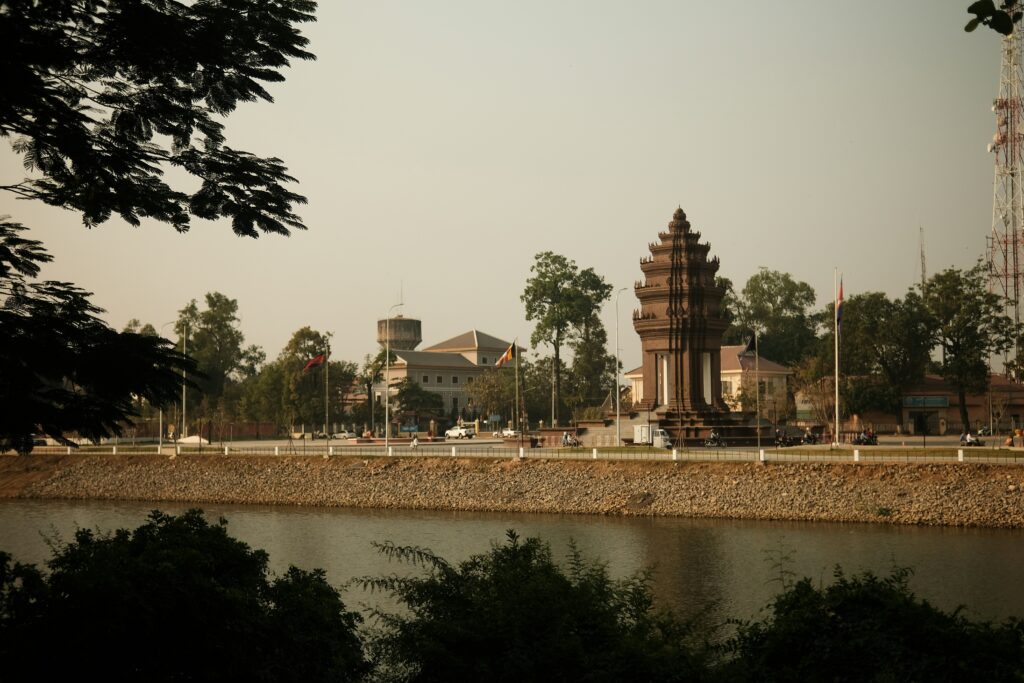
Battambang is a riverside city shaped by agriculture, food, architecture and the creative arts. Its centre is compact and calm, while the surrounding countryside opens into rice fields, villages, hilltop temples and working farms. Travellers who stay for more than a quick stop often discover one of Cambodia’s most rewarding places to slow down.
Conditions now
Battambang
25°C
Clear · feels like 30°C
- Humidity 96%
- Wind 6 km/h
- Air: Moderate (AQI 51)
- TodayThunderstorms31° / 25°90% rain
- TueThunderstorms32° / 24°96% rain
- WedDrizzle31° / 24°82% rain
- ThuThunderstorms31° / 25°84% rain
- FriDrizzle31° / 24°73% rain
Updated hourly. Forecast and air quality by Open-Meteo.com (CC BY 4.0). Conditions can change quickly in the wet season.
Why visit Battambang?
Battambang feels different from Cambodia’s busiest destinations. The Sangkae River divides a walkable centre of markets, cafés and historic shophouses, and rural life begins close to the city edge. The province is widely associated with rice production, while the city’s food culture earned it membership of the UNESCO Creative Cities Network as a Creative City of Gastronomy in 2023.
The main appeal is not one headline attraction. It is the combination of a relaxed city, a strong local arts scene, productive countryside and layers of heritage that can be explored at an unhurried pace.
Essential Battambang experiences
Walk the city centre and riverfront
Begin around the central market and the streets running beside the Sangkae River. The most enjoyable approach is a loose walking route rather than a strict checklist: look for old façades, small businesses, temples and everyday riverfront activity. Early morning and late afternoon are more comfortable for walking.
Battambang’s historic buildings are part of a living city, not an open-air museum. Many remain homes or workplaces, so admire them from public areas and avoid entering private property for photographs.
Explore the countryside
A half-day or full-day countryside trip helps explain Battambang’s identity. Depending on the route, visitors may see rice fields, fruit farms, family workshops, village food production and local markets. Choose guides who introduce communities respectfully and do not turn working homes into performances.
Distances are manageable, but heat and road conditions can make an improvised bicycle trip harder than expected. A remork or car is a comfortable first choice; experienced cyclists can arrange a route suited to the season.
Visit Phnom Sampov thoughtfully
Phnom Sampov combines a hilltop landscape, Buddhist sites and places connected to painful twentieth-century history. It should not be treated only as a sunset viewpoint. Dress respectfully, follow local instructions and approach memorial areas quietly.
Near dusk, large numbers of bats are often seen leaving caves in the limestone hill. The timing and scale are natural rather than guaranteed, so arrive with patience and keep a respectful distance from the cave entrance and local traffic.
See the region’s older temples
Wat Ek Phnom and Phnom Banan introduce another historical layer beyond the city centre. These sites are smaller and quieter than Angkor, and their condition, access and visitor facilities differ. Combine one temple with nearby countryside stops instead of rushing between every site in a single day.
Make time for food
Battambang’s UNESCO designation reflects a food culture tied closely to surrounding farms and rice-based products. Explore local markets, Khmer restaurants and independently run food experiences, asking what is seasonal and produced in the province. A thoughtful food day can be as revealing as a sightseeing tour.
Look beyond a list of famous dishes. Fresh produce, preserved fish products, rice, noodles, fruit and family recipes all help connect the city to its agricultural landscape.
Support the creative arts
Battambang has a nationally important community of artists and performers. Exhibitions, workshops and performances change throughout the year, so check current programmes directly with venues. Buying work from artists or attending a ticketed performance is a practical way to support the local creative economy.
What about the bamboo train?
The bamboo train is one of Battambang’s best-known visitor experiences, but routes and operations have changed over time. If it interests you, confirm the current location, journey format and price locally rather than relying on an old guidebook or map listing. Treat it as one possible countryside activity, not the defining reason to visit the province.
How many days do you need?
Two full days is a useful minimum: one for the city and food, and one for the countryside and Phnom Sampov. Three days allows a slower temple route, more time with the arts community or an additional rural excursion. Battambang rewards travellers who spread it over more than a single tour.
When to visit
November to February generally brings drier and cooler conditions for walking and countryside trips. March and April are usually hotter, making early starts more important. The wetter months bring greener fields and dramatic skies, but showers can affect rural roads and outdoor plans.
Agricultural scenery changes through the year. Do not expect every rice field to be vivid green or every farm activity to be visible in every season.
Getting there and getting around
Road services connect Battambang with Phnom Penh, Siem Reap and other northwestern destinations; check the official Royal Railway page for any train service. Schedules and travel times can change, so confirm current information directly with operators before departure.
How to get there
- Compare operators and book BookMeBus · redBus Cambodia · 12Go · Baolau. These platforms list the operators on each route.
- From Siem Reap (about 3–4 hours) Bus or minivan (several operators; compare them on the platforms above), or a seasonal boat depending on water levels.
- From Phnom Penh (about 5–6 hours) Bus or minivan. Trains are limited; check Royal Railway’s official page before planning around one.
- Around Battambang The centre is walkable; bicycles, remorks and taxis for the countryside.
Book through the operator, your hotel, or one of the platforms above. Cambodia Handbook is independent and not sponsored. Schedules change, so check the operator’s official website or office before you travel. Last checked 19 October 2026. See also transport booking and getting around Cambodia.
The central city is walkable, and bicycles are practical for short distances in suitable weather. For rural routes, remorks, taxis and guided cycling trips are common. Agree on the itinerary, duration and price before leaving, especially when several distant stops are combined.
A balanced first visit
Use your arrival day for the market, historic centre and riverfront. Give the next morning to a countryside route, return for a rest during the hottest hours, then visit Phnom Sampov later in the day. Keep a third day for food, art and one older temple. This sequence shows Battambang as a living cultural and agricultural centre rather than a collection of isolated attractions.
Planning notes
- Confirm transport, performance schedules and attraction arrangements close to your visit.
- Dress respectfully at temples and memorial places.
- Ask before photographing people, homes or working areas.
- Carry water and sun protection on countryside journeys.
- Allow plans to change with weather, road conditions and seasonal farm activity.
Featured photograph: Battambang’s Independence Monument beside the river by Siborey Sean, available through Unsplash.
Nearby provinces
Continue into a neighbouring province. See all 25 on our provinces of Cambodia page.
Featured image: Battambang Independence Monument by Siborey Sean, via Unsplash.