
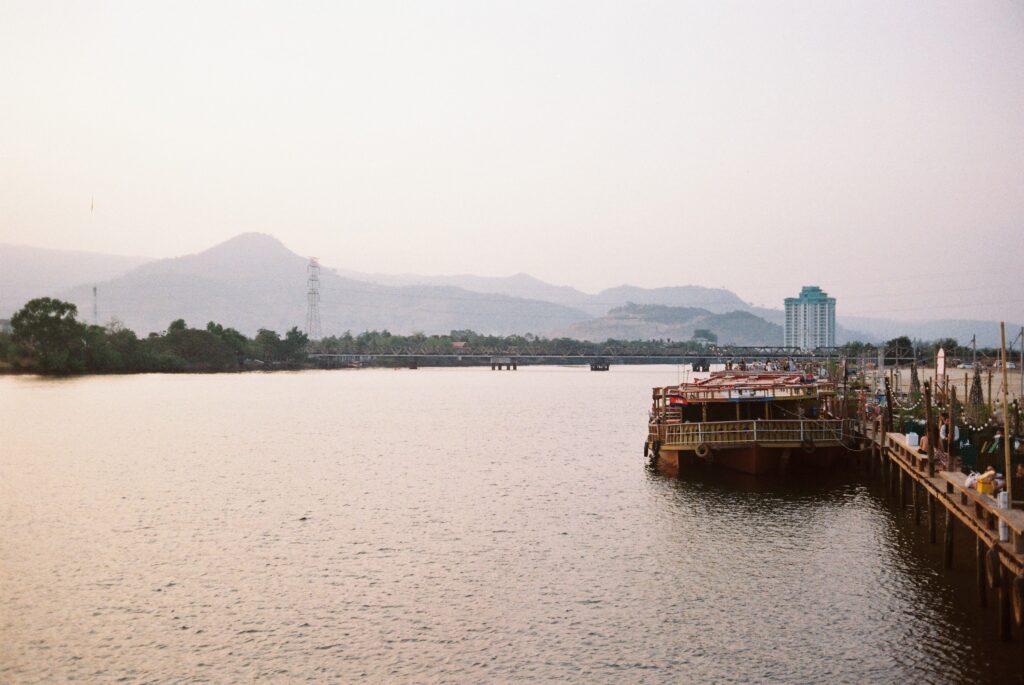
Kampot is a small riverside city with an unusually broad range of experiences close at hand. The town itself is easygoing, while the surrounding province brings together pepper farms, limestone hills, caves, waterways and the forested slopes of Bokor. It works especially well for travellers who want to slow down without running out of things to explore.
Conditions now
Kampot
25°C
Overcast · feels like 31°C
- Humidity 96%
- Wind 7 km/h
- Air: Good (AQI 37)
- TodayThunderstorms31° / 24°96% rain
- TueDrizzle31° / 24°100% rain
- WedThunderstorms32° / 25°88% rain
- ThuDrizzle31° / 24°80% rain
- FriDrizzle30° / 24°92% rain
Updated hourly. Forecast and air quality by Open-Meteo.com (CC BY 4.0). Conditions can change quickly in the wet season.
Why visit Kampot?
Kampot offers a gentler rhythm than Cambodia’s largest cities. Much of its appeal comes from simple pleasures: walking beside the river in the late afternoon, eating locally grown pepper with seafood, cycling through the countryside or watching the mountains change colour as the weather moves through.
The city is also a useful base. Bokor National Park rises to the west, rural roads lead to farms and limestone formations, and the coast around Kep is close enough for a day trip. That variety makes Kampot a strong stop for both a short Cambodia itinerary and a longer, slower journey.
Essential Kampot experiences
Spend time along the river
The riverfront is Kampot’s natural centre. Begin with an unhurried walk through the compact town, then return to the water toward sunset. Boat trips are widely offered, but the experience varies by operator and season, so check the route, duration and safety equipment before booking.
Explore Bokor
The road up Bokor gives access to cooler air, wide viewpoints and changing mountain weather. Mist can arrive quickly, and visibility is not guaranteed. Treat the journey as part of the experience rather than relying on one particular view. A car or experienced local driver is the easiest choice for most first-time visitors.
The Ministry of Tourism highlights Bokor National Park and the wider province’s natural attractions as central reasons to visit Kampot. Conditions at waterfalls and viewpoints change through the year, so ask locally before setting out.
Visit a pepper farm
Kampot pepper is one of the region’s best-known ingredients. A farm visit can show how the vines are cultivated and how green, red, white and black pepper are produced. Choose a farm that explains its growing and processing methods clearly, and remember that “Kampot pepper” refers to a protected regional product rather than simply any pepper sold in town.
For travellers interested in food, this is more meaningful than treating pepper as a souvenir alone. Tastings reveal how ripeness and processing change the aroma, heat and texture.
Take a countryside route
Beyond town, small roads pass rice fields, villages, palm trees and limestone outcrops. Caves and rural attractions are spread out, and road conditions can change after rain. A remork, car or guided bicycle trip is often more comfortable than trying to combine too many stops independently.
Keep the day flexible. Kampot’s countryside is best enjoyed at a measured pace, with time for short walks and local meals rather than a rushed checklist.
Make room for the coast
Kep can be visited from Kampot, especially if your itinerary does not include an overnight stay there. The two destinations have different characters: Kampot is the stronger riverside and countryside base, while Kep is associated with the coast, seafood and nearby islands. Allow enough time to enjoy one place rather than spending most of the day in transit.
How many days do you need?
Two days is enough for the town, riverfront and one major outing. Three days gives a better balance: one day around Kampot, one for Bokor and one for pepper farms or the countryside. Add a fourth day if you prefer slow mornings, want a full coastal excursion or plan to cycle.
When to visit
November to February usually brings drier, cooler conditions and is the easiest period for outdoor exploration. March and April are typically hotter. The wetter months make the countryside greener, but showers can be heavy and some rural routes become less convenient.
Bokor has its own mountain conditions. It may be cooler, windier and cloudier than the city below, even on the same day. Carry a light rain layer and enjoy the views you get, whatever the visibility.
Getting to Kampot and getting around
Road and rail services connect Kampot with Phnom Penh and Cambodia’s southern coast. Schedules, stopping points and journey times can change, so confirm current details directly with the operator before travel.
How to get there
- Compare operators and book BookMeBus · redBus Cambodia · 12Go · Baolau. These platforms list the operators on each route.
- From Phnom Penh (about 3–4 hours) Minivan or bus (several operators; compare them on the platforms above), or the Royal Railway train; check its official timetable.
- From Kep (about 30 minutes) Minivan, taxi or tuk-tuk.
- From Sihanoukville Minivan or bus; check the Royal Railway timetable if you prefer the train.
- In town The centre is walkable; remorks, bicycles and taxis cover the countryside.
Book through the operator, your hotel, or one of the platforms above. Cambodia Handbook is independent and not sponsored. Schedules change, so check the operator’s official website or office before you travel. Last checked 19 October 2026. See also transport booking and getting around Cambodia.
Central Kampot is walkable. For the countryside, travellers commonly use remorks, taxis, rented bicycles or motorbikes. Choose transport according to distance and weather, not only price. If you rent a vehicle, check its condition, understand the rental terms and make sure you are properly licensed and insured.
A balanced first visit
On your first afternoon, settle into the town and walk beside the river near sunset. Use the next day for Bokor, leaving enough time for changing weather. On the third day, visit a pepper farm and follow a countryside route without overloading the schedule. This combination introduces Kampot through its three strongest qualities: water, mountains and agriculture.
Planning notes
- Confirm opening hours, road conditions and transport schedules close to your visit.
- Carry water, sun protection and a light rain layer for countryside trips.
- Ask before photographing people or entering working farm areas.
- Do not assume every product labelled with Kampot’s name was grown or processed locally.
- Leave space in the itinerary; Kampot is more rewarding when the day is not rushed.
Featured photograph: Kampot river at dusk by Phon PhaNith, available through Pexels.
Nearby provinces
Continue into a neighbouring province. See all 25 on our provinces of Cambodia page.
Featured image: Kampot River at dusk by Phon PhaNith, via Pexels.