
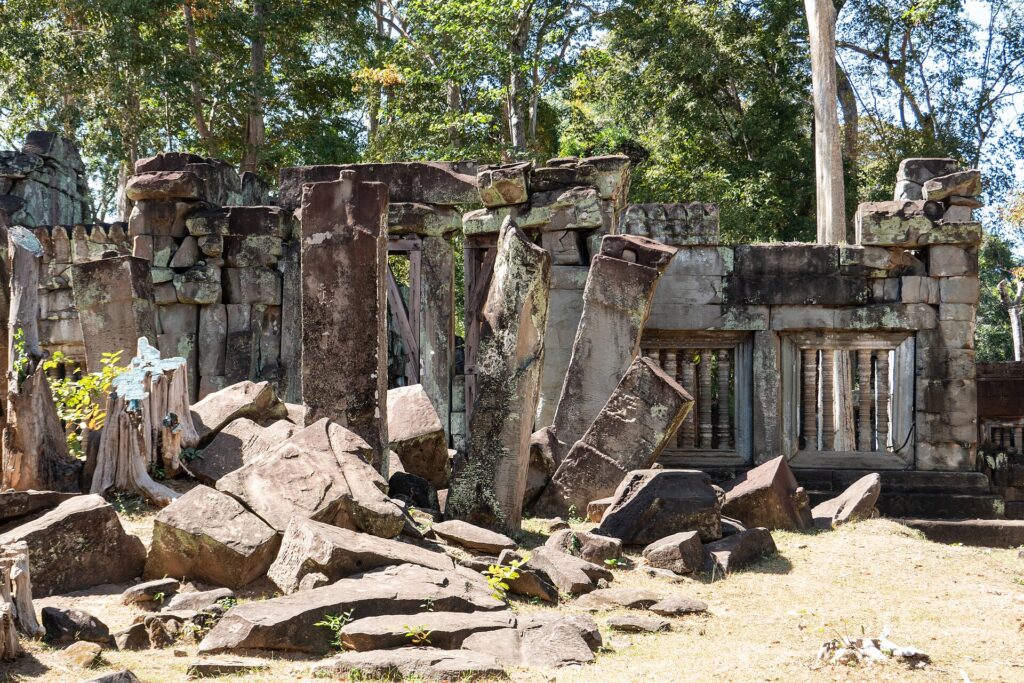
Koh Ker is an archaeological landscape of monuments, water features and traces of an ancient capital. Prasat Thom and its stepped pyramid are the best-known image, not the whole site.
A former capital
Koh Ker—ancient Lingapura or Chok Gargyar—became a centre of royal power in the 10th century. Its urban plan, monumental scale, sculpture and hydraulic landscape give it a character distinct from the better-known Angkor circuits. UNESCO inscribed the property in 2023.
Plan enough time
Allow several hours on site and a full day from Siem Reap. An overnight route with Preah Vihear reduces road fatigue. Heat, distances between monuments and stair access make a driver and realistic schedule important.
Move beyond Prasat Thom
Use the official or current visitor route to see a selection of shrines and landscape features without racing through every stop. Respect barriers and remember that scattered stone, sculpture and vegetation remain part of an archaeological context.
Useful reading
UNESCO World Heritage Centre: Koh Ker
Why Koh Ker needs time
The archaeological landscape extends beyond its best-known stepped monument. A slower visit allows the relationship among reservoirs, shrines, roads and forest to become clearer. Follow the established circuit and do not enter closed structures, even when an opening appears accessible.
Plan the journey from Siem Reap
Koh Ker is a substantial road excursion. Confirm vehicle comfort, pickup time, ticket arrangements and which other stops are genuinely realistic. Combining it with too many distant temples can turn the day into driving with only hurried visits.
Heat, surfaces and access
Carry water and sun protection, and expect uneven ground. Steps may be steep or unsuitable for some visitors. Viewing from below still reveals the monument’s scale; no traveller should feel pressured to climb.
Protect the site
- Stay on marked routes and platforms.
- Never move loose stone or take forest material.
- Keep food and rubbish secured.
- Respect barriers intended to protect both visitors and fragile structures.